
The Evolution of Professional GPUs: From RTX Ada to RTX PRO Blackwell
A workload-led view of professional GPU generations for rendering, CAD, AI and virtual workstations.
One project file, several kinds of waiting
Opening a scene, rotating a model, rendering it and processing the output with an AI tool look like one workflow. They can stress quite different resources. Loading may wait on storage; interaction may depend on the CPU and driver; rendering may finally saturate the GPU. Using the last stage to represent the whole working day can overstate the benefit of a card replacement.
The useful generational comparison begins with the delay that affects delivery. CAD, CAE, digital twins and offline rendering share hardware capabilities, but not a single representative performance metric.
RTX A6000 and Ada: start with the working set
RTX A6000 uses GDDR6 and is not the same generation as RTX 6000 Ada Generation. RTX 5000 Ada Generation, RTX 4500 Ada Generation and RTX 4000 Ada Generation provide other configurations, but model numbers cannot replace application testing. Include geometry, textures, rendering buffers and AI models in the working-set estimate. If data repeatedly spills out of GPU memory, a higher compute peak may do little for interactive responsiveness.
RTX PRO Blackwell: evaluate the complete configuration
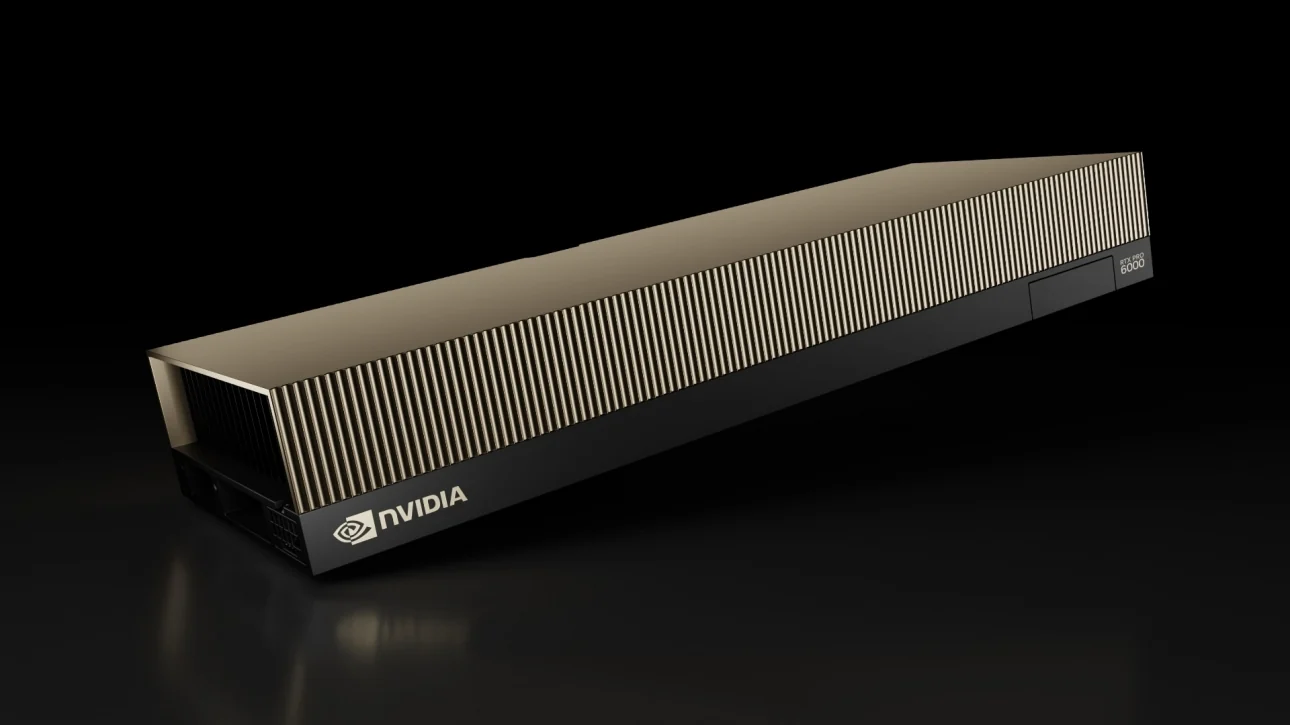
RTX PRO 6000 Blackwell, RTX PRO 5000 Blackwell, RTX PRO 4500 Blackwell and RTX PRO 4000 Blackwell span different professional configurations; RTX PRO 2000 Blackwell extends the discussion to compact deployments. GDDR6 to GDDR7 and PCIe Gen4 to Gen5 are relevant transitions, but a family name does not guarantee identical interfaces, power envelopes or dimensions. Desktop, server and mobile editions must be checked by their complete names.
Virtual workstations need concurrency testing
A virtual workstation cannot be sized by dividing a single-user result by a user count. Simultaneous model rotation, rendering and file loading compete for memory, encoding and network resources. Test normal interaction, login bursts and the busiest period separately, and check the vGPU support matrix and software licensing. Hardware capability does not mean the existing virtualization stack can expose it without changes.
Keep representative project files and record application and driver versions. Measure loading, interaction, rendering and export separately. For AI tools, assess output quality alongside waiting time. If storage or CPU work is limiting the pipeline, address that constraint first. This separates the value of a GPU upgrade from unrelated changes and avoids treating several different theoretical capabilities as one purchasing metric.
Related research
Sources / References
- NVIDIA professional product literature
- NVIDIA RTX A6000
- NVIDIA RTX PRO 2000 Blackwell
- NVIDIA virtual workstation GPU selection
Research reviewed on 2026-09-07. Product references are for technical analysis, not a supply commitment. Deployment depends on the exact system and software configuration.